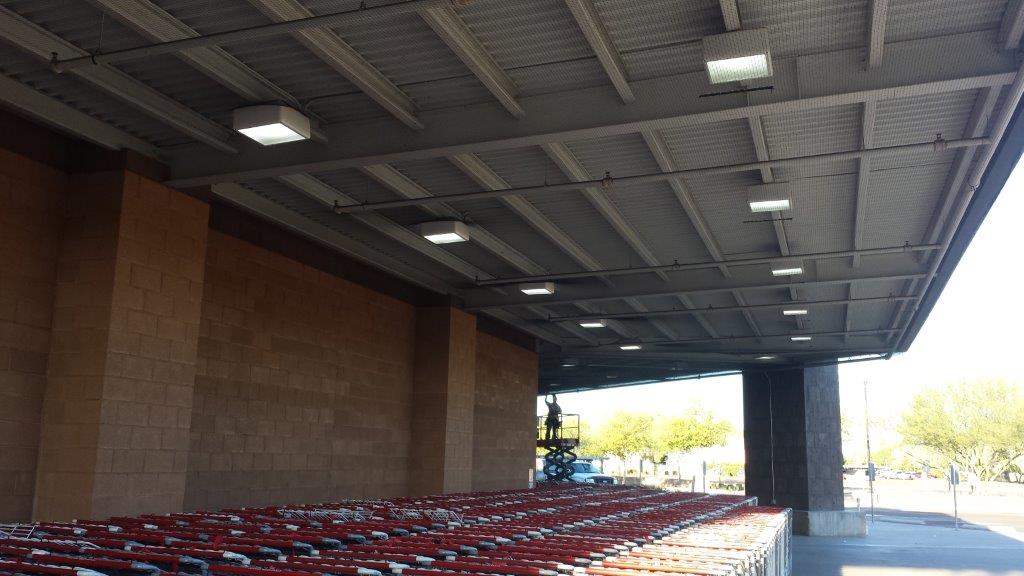
Bird netting installation across a commercial facility with zippered access for lighting
water_drop

UV-stabilized polyethylene netting and stainless hardware specified for Gulf humidity, salt air, and hurricane-zone wind loads — built to outlast a single storm season.

factory

Crews trained for USDA / FDA biosecurity protocols, food-grade exclusion materials, and the wash-down and sanitation realities of Arkansas poultry plants.

Commercial Bird Control for Louisiana & Arkansas

The Southern US has a bird pressure profile unlike anywhere else we work. Hot, humid air keeps reproductive cycles running year-round — mild winters never break the population. Gulf petrochemical corridors, Mississippi River shipping terminals, and Arkansas's dense poultry and food-distribution network all generate the kind of food, water, and shelter that rock pigeons, European starlings, house sparrows, and grackles thrive on. Add black and turkey vultures roosting on industrial flares and tank-farm stairways, and most facility managers down here are managing several bird problems at once.

Rid-A-Bird is a Phoenix-based commercial bird control company with 35+ years of experience. For Southern US projects, our crews mobilize from Arizona on a project basis — common when the scope justifies travel, which for poultry processing complexes, Gulf refinery hardening, Walmart DC rollouts across Bentonville, or multi-site port and cargo terminal work, it consistently does. We're honest about the model: we are not your local provider for a single $2,000 spike job. We are the right call when you need experienced commercial exclusion work and your local options have been quoting unrealistic timelines or material specs that won't survive a summer in Lake Charles.

Boat-tailed grackles in coastal Louisiana parking lots, common grackles roosting in Little Rock retail centers, pigeons hammering the Port of South Louisiana cargo sheds, starlings inside Baton Rouge refinery process buildings, vulture clusters on Monroe transmission infrastructure — each requires a different methodology. We build the scope around the species, the site, and the regulatory environment, not a one-size pest-control template.

Multi-Site Poultry or DC Rollout? We Handle Portfolio Scope.

Methods We Install Across Louisiana & Arkansas

egg

Poultry Processing Exclusion

Floor-to-rafter netting, dock canopy seals, and rooftop penetration screening built for USDA-inspected plants — food-grade materials, biosecurity-compliant install sequencing, wash-down survivable hardware.

oil_barrel

Gulf Petrochemical Hardening

Refinery and tank-farm exclusion specified for salt air and chemical exposure — 316 stainless spikes, UV-stabilized netting, and pipe-rack screening at the Baton Rouge to Lake Charles corridor scale.

directions_boat

Port & Cargo Terminal Netting

Heavy-duty exclusion at cargo sheds, grain elevators, and container terminals along the Mississippi River and Gulf — pigeon and starling control without disrupting loading operations.

storm

Hurricane-Rated Material Specs

Netting tension hardware, anchor points, and cable specs rated for sustained Gulf wind loads — engineered so a single named storm doesn't take down the install.

flutter_dash

Vulture Roost Dispersal

Federally protected — lethal control requires a USFWS Migratory Bird Depredation Permit. We deploy effigies, perch modification, and physical exclusion on stairways, flare stacks, and rooftop equipment to push roosts off-site legally.

humidity_mid

Humidity & Mold-Resistant Netting

UV-stabilized polyethylene specified for Gulf humidity longevity — the wrong netting blend mildews and degrades inside two seasons down here. Ours is the right blend.
Why Southern Operators Choose Rid-A-Bird

Plan Your Southern US Bird Control Project — Call (623) 587-0125.

Southern US Bird Control FAQ

Do you actually do work in poultry processing plants? They have strict biosecurity.
Yes. We've executed bird exclusion inside USDA-inspected poultry processing complexes and adjacent feed mills, hatcheries, and cold storage. Our crews work to plant biosecurity protocols — shower-in/shower-out where required, plant-issued PPE, dedicated tools, downtime-window install scheduling. The exclusion materials we spec for poultry plants are food-grade and survive caustic wash-down. We're not the right call if you need a $500 spike job on a single roost; we are the right call for full-plant or multi-plant scope.
You're based in Phoenix — how does a project in New Orleans or Bentonville actually work?
Project-based mobilization. For a Southern US scope, we mobilize a crew, lift equipment, and materials from Arizona to the site for the duration of the install. That's normal in commercial bird control — most national programs work this way because the specialized labor pool is small. Travel, per-diem, and lift rental are line-itemed transparently in the proposal. The model works when the scope justifies the mobilization — typically poultry-plant exclusion, refinery hardening, port terminal netting, or multi-site DC rollouts. Single-building small jobs are usually better served by a local provider, and we'll tell you that on the assessment call.
What material specs hold up in Gulf humidity and hurricane season?
UV-stabilized polyethylene netting (not the cheap nylon blends that mildew inside two seasons), 316-grade stainless spikes and hardware for salt-air corridors, marine-grade cable and turnbuckles for tension hardware, and anchor spacing engineered for sustained wind loads in the hurricane zone. Where a project sits in an actively forecasted storm path, we spec breakaway tension panels so the netting fails in a controlled way rather than taking the structural anchor with it.
Can you get vultures off our flare stack or transmission tower?
Honest answer: both black and turkey vultures are federally protected under the Migratory Bird Treaty Act. Lethal control is illegal without a USFWS Migratory Bird Depredation Permit, which is hard to get and species-specific. What we can do legally and effectively is exclusion and harassment — perch modification on stairway rails and equipment ledges, effigy deployment (vultures are unusually responsive to effigies of their own species), pyrotechnic and laser dispersal where the site permits, and physical netting on enclosable structures. Realistic outcome: we push the roost off your site to an adjacent location. Total elimination from the surrounding area is not what exclusion is for.
How long does netting last in this climate compared to dry parts of the country?
A properly specified UV-stabilized polyethylene net with stainless hardware will run 10+ years in Gulf humidity — same as our Arizona installs, because we spec for the climate up front. A poorly specified install will be visibly degraded in 24–36 months. The difference is the netting blend, hardware grade, and tension-hardware corrosion rating. Every proposal we issue for the Southern US uses the climate-rated spec, and the lifetime warranty against bird intrusion is written into it.