UV- and moisture-rated netting, stainless steel hardware, and mold-resistant fasteners specified specifically for 200+ rain-day climates west of the Cascades.
Exclusion designs built for the two birds that dominate PNW commercial sites — invasive European Starling colonies inland and Glaucous-Winged and Western Gulls along the coast.
The Pacific Northwest has the worst commercial starling problem in the United States. European Starlings — an invasive species first released in the U.S. in the 1890s — find ideal conditions in WA and OR: mild wet winters, abundant industrial structures, and warehouses, food plants, and aerospace facilities full of beam-and-truss roosting habitat. A single starling roost can produce thousands of birds; left unaddressed, that translates to contaminated inventory, slip hazards, OSHA exposure complaints, and degraded roofing and HVAC.
Coastal sites carry a second pressure: Glaucous-Winged Gulls and Western Gulls at the Port of Seattle, Port of Tacoma, Port of Portland, seafood processing facilities along the Columbia River and Oregon coast, and rooftop equipment at any commercial property within a few miles of saltwater. Inland, Rock Pigeons dominate older buildings, retail centers, and tech-campus parking structures from Bellevue to Beaverton.
Rid-A-Bird is a Phoenix-based commercial bird control company with 35+ years of exclusion experience. We mobilize crews to Washington and Oregon for commercial projects — port terminals, distribution centers, aerospace facilities, food plants, wineries, and multi-site retail portfolios — where the scope justifies the travel and the local options can't deliver the lifetime netting warranty or the multi-site consistency our clients need.
Knotted polyethylene netting rated for sustained moisture exposure and continuous UV cycling. Hardware spec is stainless steel — galvanized rusts through within a few seasons in marine air.
Netting and spike systems at container terminals, warehouse buildings, and overhead structures at the Ports of Seattle, Tacoma, and Portland. Crews carry TWIC clearance for secure-area access.
Rooftop wire grids, post-and-wire systems, and exclusion netting on canopies and parapets — non-lethal only. Gulls are federally protected, so the work is exclusion-first by design and by law.
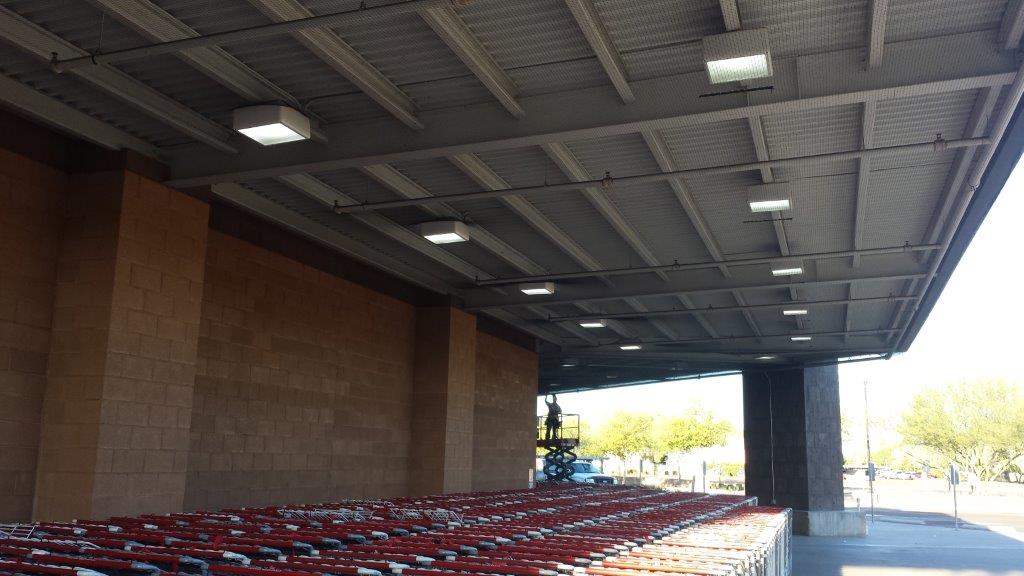
Large-scale interior netting and roost-blocking for starling-infested warehouses, food plants, and aerospace hangars. Exclusion is the only durable answer — trapping a colony just clears space for the next flock.
Netting layouts preserve drainage paths on flat and low-slope roofs. Spike and wire systems mounted clear of scuppers and roof drains so winter rainfall has nowhere to pond.
Anti-microbial coatings on netting in damp interior environments, sealed penetrations to keep moisture out of nesting voids, and remediation protocols that handle wet droppings without spreading contamination.